Rare earth elements) have become strategic resources due to their essential role in electric vehicles, renewable energy systems, permanent magnets, electronics, and advanced technologies. However, developing a successful rare earth mining project is far more complex than simply discovering an ore deposit. The real challenge lies in accurately evaluating the ore quality, mineral composition, and processing potential before investing in large-scale mining operations.
Unlike traditional minerals such as iron or copper, rare earth ores often contain multiple valuable elements distributed among complex mineral structures. A deposit with a high rare earth grade does not always guarantee economic recovery. The mineral type, liberation characteristics, and beneficiation response all determine whether the project can become commercially viable. From sample preparation to beneficiation testing, laboratory evaluation connects geological exploration with industrial-scale mining success.
Understanding the Challenges of Rare Earth Ore Testing
Complex Mineral Composition Makes Analysis Difficult
Rare earth deposits are among the most challenging mineral resources to evaluate because rare earth elements rarely occur as single minerals. Instead, they are usually contained within different mineral phases, each requiring specific analysis and processing methods.
Common rare earth-bearing minerals include:
- Bastnäsite – an important source of light rare earth elements, especially cerium and lanthanum
- Monazite – a phosphate mineral containing valuable rare earth elements and thorium
- Xenotime – a major source of heavy rare earth elements such as yttrium
- Allanite and Eudialyte – complex minerals found in some rare earth deposits
A major testing challenge is that the total rare earth oxide (TREO) value alone cannot determine the economic potential of ore. Two samples with similar REE grades may have completely different recovery rates because their mineral structures and liberation characteristics are different.
Therefore, modern rare earth testing requires both chemical analysis and mineralogical investigation to understand not only “how much” rare earth exists but also “where” it exists.
Uneven Distribution Requires Accurate Sample Preparation
Rare earth minerals are often unevenly distributed throughout an ore body. If samples are not properly prepared, laboratory results may not represent the actual deposit conditions.
The sample preparation process typically includes:
Crushing
- Reduces large rock samples into smaller particles
- Releases mineral particles for further testing
- Prevents sampling errors
Grinding
- Produces suitable particle sizes for analysis
- Improves mineral liberation before beneficiation tests
Sample Splitting and Pulverizing
- Creates representative test samples
- Ensures consistent laboratory results
- Important factors during preparation include:
- Avoiding contamination between samples
- Maintaining representative particle distribution
- Selecting suitable grinding fineness
- Using properly calibrated laboratory equipment
Poor sample preparation can lead to inaccurate results, causing incorrect decisions during mine development.
Main Methods Used in Rare Earth Ore Testin
Chemical Analysis: Measuring Rare Earth Element Content
Chemical analysis determines the concentration of rare earth elements and other important components in an ore sample. Different analytical methods are selected depending on the purpose.
XRF Analysis
X-ray fluorescence (XRF) analysis is widely used for rapid mineral screening.
Advantages include:
- Fast testing speed
- Multi-element detection capability
- Minimal sample preparation requirements
- Non-destructive analysis
XRF is commonly used during exploration and preliminary evaluation stages.
However, XRF may have limitations when measuring extremely low concentrations of certain rare earth elements, so advanced laboratory methods are often required for detailed evaluation.
ICP-OES and ICP-MS Analysis
For more accurate rare-earth measurements, laboratories often use inductively coupled plasma techniques.
- ICP-OES (Inductively Coupled Plasma Optical Emission Spectrometry) provides accurate elemental analysis for many mining applications.
- ICP-MS (Inductively Coupled Plasma Mass Spectrometry) offers higher sensitivity and is suitable for trace element detection.
Comparison:
Testing Method | Main Advantage | Typical Application |
XRF | Fast and efficient | Initial ore screening |
ICP-OES | Accurate multi-element analysis | Detailed laboratory testing |
ICP-MS | Extremely high sensitivity | Trace element evaluation |
A practical testing strategy is often to combine rapid screening methods with advanced analysis to balance speed, accuracy, and cost.
Mineralogical Testing: Understanding Rare Earth Mineral Behavior
Why Mineral Identification Matters?
Chemical testing provides the rare earth grade, but mineralogical testing explains how those elements can be recovered.
Modern laboratories use techniques such as:
- X-ray diffraction (XRD)
- Scanning electron microscopy (SEM)
- Automated mineralogy analysis
These methods help determine:
- Which rare earth minerals are present
- How minerals are associated with waste materials
- The required grinding size for liberation
- The most suitable beneficiation process
For example, monazite-rich ore and bastnäsite-rich ore may contain similar rare earth elements but require different processing approaches. Without mineralogical analysis, selecting the wrong recovery method can significantly reduce production efficiency.
From Laboratory Testing to Industrial Processing: Building a Complete Workflow
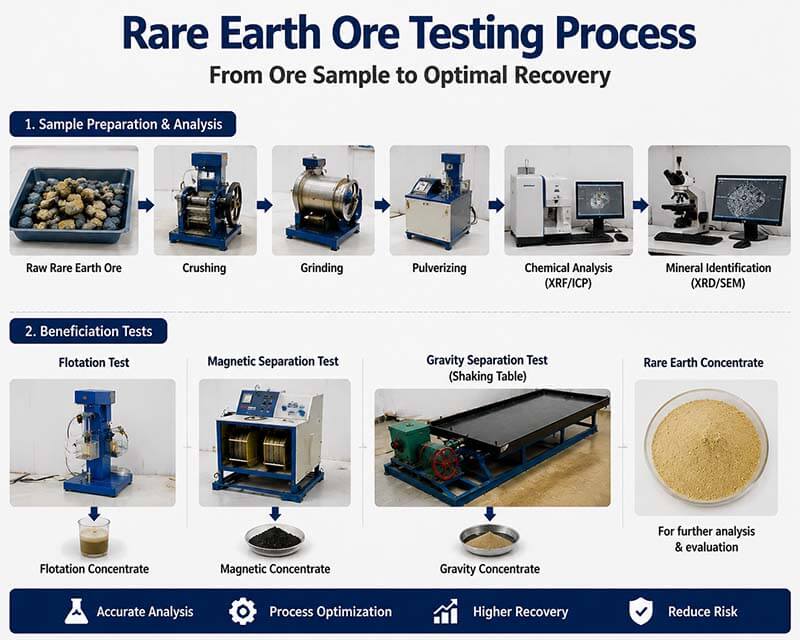
A successful rare earth project requires more than laboratory analysis. The most valuable testing programs simulate future industrial conditions and provide practical guidance for plant design.
The typical workflow includes:
Ore Sample → Laboratory Analysis → Mineral Identification → Beneficiation Testing → Pilot Study → Industrial Plant Design
Beneficiation Testing: Evaluating Recovery Potential
After understanding the ore characteristics, laboratories conduct beneficiation tests to determine the most effective separation method.
Gravity Separation Testing
Gravity separation can be effective for dense rare earth minerals such as monazite.
Testing factors include:
- Particle size
- Mineral density difference
- Feed concentration
- Recovery rate
Common laboratory equipment:
- Shaking tables
- Spiral separators
- Magnetic Separation Testing
Some rare earth minerals have magnetic properties, which makes magnetic separation important.
Laboratory testing examines:
- Magnetic intensity
- Mineral response
- Separation efficiency
Equipment examples:
- Laboratory magnetic separators
- Flotation Testing
Flotation is widely studied for rare earth minerals because many REE minerals require selective separation from surrounding gangue minerals.
Important parameters include:
- Collector selection
- Reagent dosage
- pH value
- Grinding fineness
- Flotation time
Laboratory flotation tests help engineers optimize conditions before designing commercial processing plants.
Common Challenges and Laboratory Solutions
Challenge 1: High Grade Does Not Always Mean High Recovery
A high TREO value does not guarantee profitability.
Solution:
Combine:
- Chemical analysis
- Mineralogical testing
- Beneficiation experiments
- to evaluate actual recovery potential.
Challenge 2: Laboratory Results May Not Reflect Industrial Conditions
Small samples cannot always represent full-scale production behavior.
Solution:
Mining companies should gradually increase testing scale:
- Laboratory testing
- Bench-scale experiments
- Pilot testing
- Industrial simulation
This reduces investment risks before plant construction.
Challenge 3: Balancing Testing Accuracy and Project Cost
Advanced testing methods can increase evaluation costs.
Solution:
Develop an optimized testing strategy:
- Use rapid screening for early-stage evaluation
- Apply advanced analysis only to valuable samples
- Focus testing on factors affecting recovery and economics
Essential Laboratory Equipment for Rare Earth Ore Testing
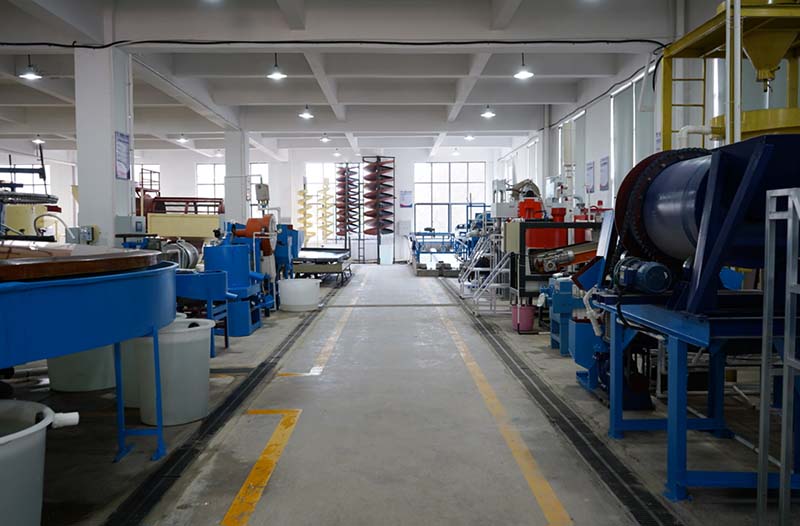
A reliable mineral testing laboratory requires equipment that supports the complete sample-to-result workflow.
Key equipment includes:
- Sample Preparation Equipment
- Laboratory jaw crusher
- Laboratory ball mill
- Pulverizer
- Sample divider
Mineral Processing Testing Equipment
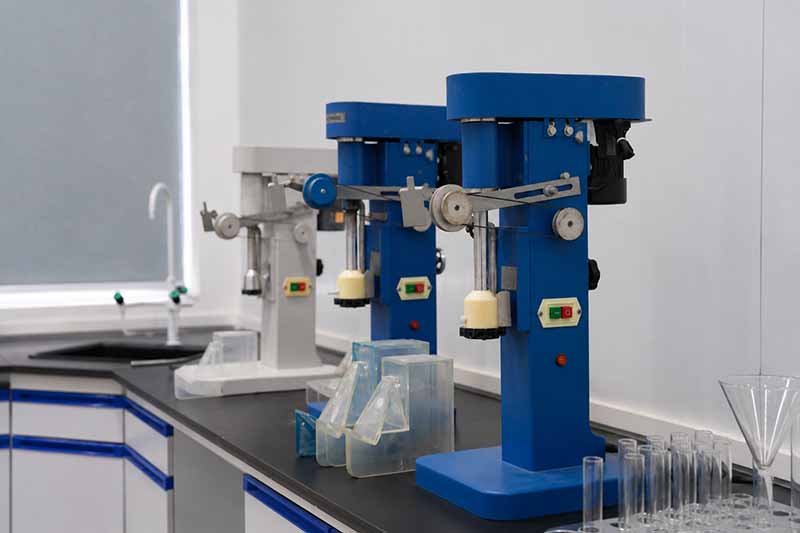
- Laboratory flotation machine
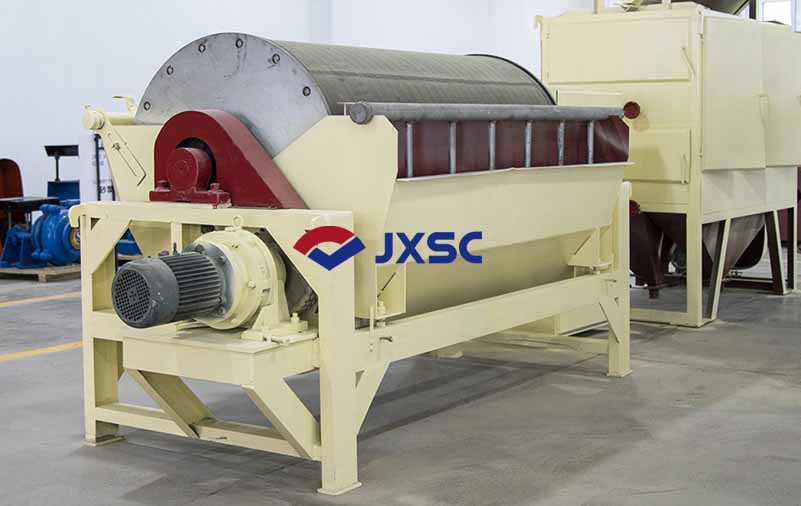
- Magnetic separator
- Shaking table
These lab machines allow laboratories to simulate industrial processing conditions and provide reliable data for mining decisions.
Future Trends in Rare Earth Testing and Mineral Processing
The future of rare earth testing is moving toward faster, smarter, and more sustainable solutions.
Emerging trends include:
- AI-assisted mineral identification
- Automated laboratory analysis
- Digital mineral processing simulation
Environmentally friendly beneficiation methods
These technologies will help mining companies improve recovery rates while reducing resource waste and environmental impact.
Conclusion
Rare Earth Ore Testing: Challenges and Laboratory Solutions is not only about measuring mineral grades; it is about understanding the complete behavior of an ore deposit. Accurate laboratory testing provides essential information for selecting processing methods, optimizing recovery, and reducing investment risks.
From sample preparation and chemical analysis to mineral identification and beneficiation testing, every laboratory step contributes to better mining decisions. For companies developing rare earth projects, investing in comprehensive testing before construction is one of the most effective ways to improve project success.
A well-designed laboratory testing program transforms uncertain geological resources into reliable industrial opportunities.
JXSC lab mineral processing equipment manufacturer has more than 38 years of experience in mining processing. We provide various lab mining equipment including gravity-separating equipment for processing minerals such as gold, tin, tungsten, lead, zinc, tantalum, niobium, iron, manganese, silver, titanium-iron, etc. Lab machines include laboratory jaw crusher, hammer crusher, roller crusher, grinding equipment, lab gravity separator, screening, washing equipment, etc. Welcome to consult!