Pyrrhotite beneficiation is the process of separating pyrrhotite from gangue and associated minerals to produce a valuable concentrate or improve the recovery of other target minerals. Unlike ores with relatively simple mineral compositions, pyrrhotite-bearing ores can present complicated processing challenges because pyrrhotite may occur alongside chalcopyrite, pentlandite, pyrite, and other sulfide minerals.
The right beneficiation method depends on the ore’s mineralogy, liberation size, magnetic properties, oxidation condition, and the final product requirements. Magnetic separation, flotation, gravity separation, and combined processes can all have a role, but they are not equally suitable for every deposit.
This guide explains how to evaluate pyrrhotite ore and select a practical beneficiation flowsheet—from laboratory testing to equipment selection and process optimization.
Pyrrhotite Beneficiation: Methods, Process and Equipment
Pyrrhotite beneficiation can be challenging. It is commonly associated with chalcopyrite, pentlandite, pyrite, and gangue minerals, and its response to magnetic separation and flotation can vary significantly with mineral composition, liberation size, and surface oxidation.
For this reason, no single beneficiation process is suitable for every pyrrhotite deposit. The most effective approach is to characterize the ore first, then select and optimize magnetic separation, flotation, gravity separation, or a combination of these methods.
What Is Pyrrhotite?
Pyrrhotite is an iron sulfide mineral with a variable composition generally represented as Fe₁₋ₓS. Unlike minerals with a fixed chemical composition, pyrrhotite can occur in different structural forms, which contributes to differences in its physical and magnetic properties.
One of its most important beneficiation characteristics is its magnetic response. Some pyrrhotite is strongly magnetic, while other varieties show weaker magnetic behavior. This makes magnetic susceptibility testing particularly important when designing a processing flowsheet.
Pyrrhotite may be encountered alongside:
- Chalcopyrite in copper sulfide ores
- Pentlandite in nickel-bearing ores
- Pyrite and other iron sulfides
- Silicate and other gangue minerals
The processing objective also varies. In some operations, pyrrhotite is the mineral being recovered; in others, it must be selectively rejected to improve the grade of a copper or nickel concentrate.
What Determines the Right Pyrrhotite Beneficiation Method?
Before choosing equipment, several characteristics of the ore should be evaluated.
Mineralogical Composition
Determine which minerals are present and how they are associated. A pyrrhotite ore containing significant chalcopyrite requires a different separation strategy from a relatively simple pyrrhotite-gangue ore.
Liberation Size
Grinding must release pyrrhotite from surrounding minerals sufficiently for separation. Coarse pyrrhotite may respond well to magnetic or gravity separation, while finely disseminated pyrrhotite usually requires finer grinding and may be better suited to flotation.
However, excessive grinding is undesirable. It consumes additional energy and can generate slimes that interfere with flotation.
Magnetic Properties
Do not assume that every pyrrhotite ore will respond equally well to magnetic separation. Laboratory magnetic susceptibility and separation tests should determine whether magnetic recovery is technically and economically practical.
Surface Oxidation
Pyrrhotite can undergo surface changes during crushing, grinding, storage, and flotation conditioning. Oxidation can significantly alter its flotation response, making control of grinding and pulp chemistry important.
Final Product Requirements
The processing objective should be clearly defined:
- Recover pyrrhotite as a concentrate
- Reject pyrrhotite from copper concentrate
- Recover nickel-bearing minerals while controlling pyrrhotite
- Produce a specific iron sulfide product
- The desired product determines which mineral should float, remain depressed, or report to the magnetic concentrate.
Main Pyrrhotite Beneficiation Methods
The principal methods are magnetic separation, flotation, gravity separation, and combined processing.
- Method
- Suitable application
- Main advantage
- Magnetic separation
- Magnetic pyrrhotite
- Directly exploits magnetic properties
Flotation
Fine or complex sulfide ores
Strong separation selectivity
Gravity separation
- Coarse liberated particles
- Simple and low reagent consumption
- Combined process
- Complex or variable ores
- Uses multiple separation mechanisms
Magnetic Separation of Pyrrhotite
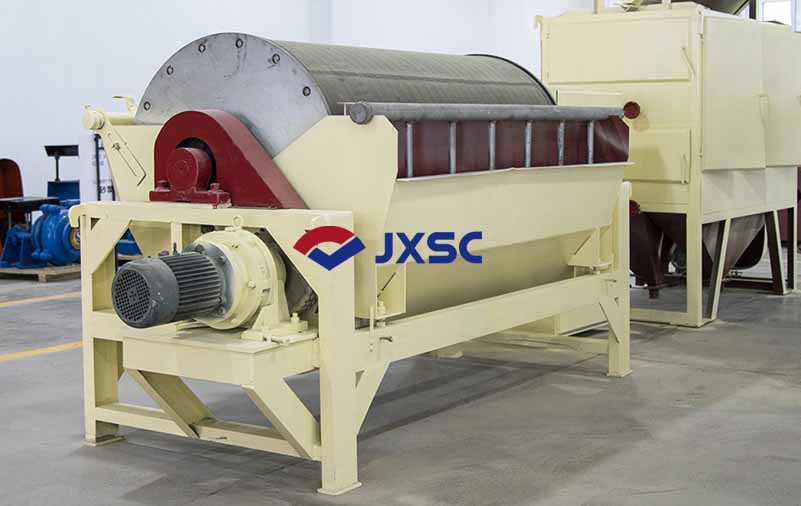
Magnetic separation is one of the most attractive options when pyrrhotite has sufficient magnetic susceptibility.
How It Works?
Magnetic separators create a magnetic field that attracts susceptible pyrrhotite particles, while less magnetic minerals are rejected. The effectiveness depends on:
- Pyrrhotite magnetic susceptibility
- Particle size
- Degree of liberation
- Magnetic field intensity
- Feed mineralogy
Magnetic separation can be especially valuable when the objective is to recover pyrrhotite while minimizing chemical reagent consumption.
When Should Magnetic Separation Be Used?
It is worth investigating when:
- Pyrrhotite is strongly magnetic
- The mineral is sufficiently liberated
- The ore contains relatively non-magnetic gangue
- Flotation selectivity is problematic
- A low-reagent process is preferred
For fine or weakly magnetic pyrrhotite, however, flotation may provide better results.
Flotation of Pyrrhotite
Flotation becomes increasingly important when pyrrhotite is finely disseminated or occurs in complex sulfide ores.
The basic principle is to modify mineral surfaces with flotation reagents so that selected particles become hydrophobic, attach to air bubbles, and report to the froth.
Grinding and Liberation
The first requirement is an appropriate grinding size. The target should not simply be “as fine as possible.” Instead, grinding should achieve sufficient liberation while limiting:
- Slime generation
- Energy consumption
- Surface oxidation
- Excessive reagent consumption
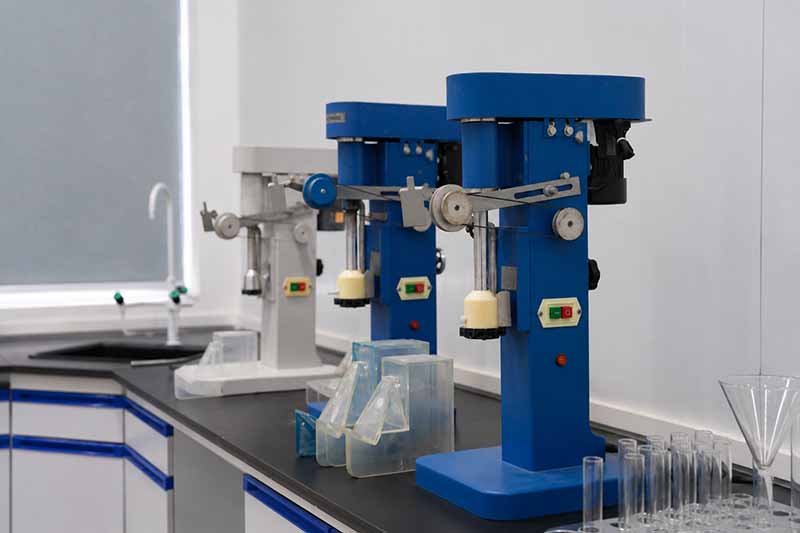
Laboratory grinding and flotation tests can identify the practical optimum.
Pulp pH
pH strongly affects mineral surface chemistry and reagent adsorption. In selective sulfide flotation, an alkaline environment may be used to suppress unwanted pyrrhotite under particular ore and reagent conditions.
However, there is no universal pH that works for every deposit. The optimum value should be established experimentally because mineralogy, water chemistry, oxidation state, and reagent selection can all change flotation behavior.
Collectors
Collectors make selected sulfide-mineral surfaces more hydrophobic. Xanthate-type collectors are commonly investigated in sulfide flotation.
Both collector type and dosage matter.
Too little collector produces poor recovery because insufficient mineral surface becomes hydrophobic. Excessive dosage can increase reagent consumption and reduce selectivity by causing unwanted minerals to float.
Depressants and Inhibitors
When pyrrhotite is an unwanted mineral, selective depression becomes particularly important. Reagents such as lime may be investigated to suppress pyrrhotite while allowing the valuable sulfide mineral to float.
The objective is not simply maximum depression. Excessive depression can also reduce the recovery of valuable minerals. Therefore, reagent dosage must be optimized through flotation testing.
Oxidation and Aeration
Pyrrhotite’s surface chemistry is sensitive to oxidation. Controlled aeration and conditioning may influence its flotation behavior, but uncontrolled oxidation can make separation less predictable.
This is one reason why laboratory testing should use conditions that reasonably represent the intended plant operation.
How to Separate Chalcopyrite from Pyrrhotite?
Chalcopyrite-pyrrhotite separation is one of the more challenging applications because both are sulfide minerals and can exhibit similar flotation behavior.
A typical strategy is to:
- Grind the ore to achieve adequate liberation.
- Establish an appropriate pulp pH.
- Select a collector that favors chalcopyrite.
- Depress pyrrhotite where necessary.
- Use rougher flotation to recover the copper-bearing mineral.
- Apply cleaner stages to improve concentrate grade.
- Investigate magnetic separation when pyrrhotite has a useful magnetic response.
The optimum conditions depend heavily on the specific ore. A reagent scheme that works well for one deposit may perform poorly on another.
Gravity Separation: Is It Suitable?
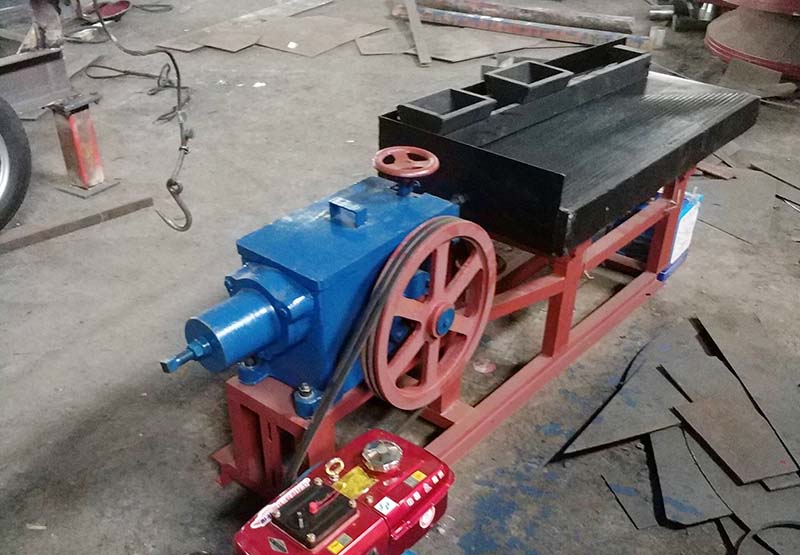
Gravity separation relies primarily on differences in particle density. It can be considered when pyrrhotite is relatively coarse and sufficiently liberated.
Potential equipment includes:
- Jig separator
- Shaking tables
- Spiral separators
Gravity separation has advantages such as simple operation and low reagent consumption; however, it generally becomes less effective as particles become very fine or when valuable and unwanted minerals exhibit similar settling behavior.
Therefore, gravity separation is usually best considered as an ore-specific option or part of a combined flowsheet, rather than a universal pyrrhotite solution.
Combined Pyrrhotite Beneficiation Flowsheets
Complex ores may benefit from combining different separation mechanisms.
Magnetic Separation + Flotation
Magnetic separation can recover or remove strongly magnetic pyrrhotite before flotation. Flotation can then treat the remaining fine or poorly magnetic material.
Gravity + Flotation
Gravity separation can recover suitable coarse particles, while flotation treats finer material.
Magnetic Separation + Grinding + Flotation
This approach may be considered when the ore contains different pyrrhotite populations with substantially different magnetic responses and liberation characteristics.
The advantage of a combined process is that each stage handles the fraction it is best suited to separate.
Pyrrhotite Beneficiation Test Work
A reliable flowsheet should be developed through systematic testing rather than equipment selection based only on the ore name.
A practical laboratory workflow is:
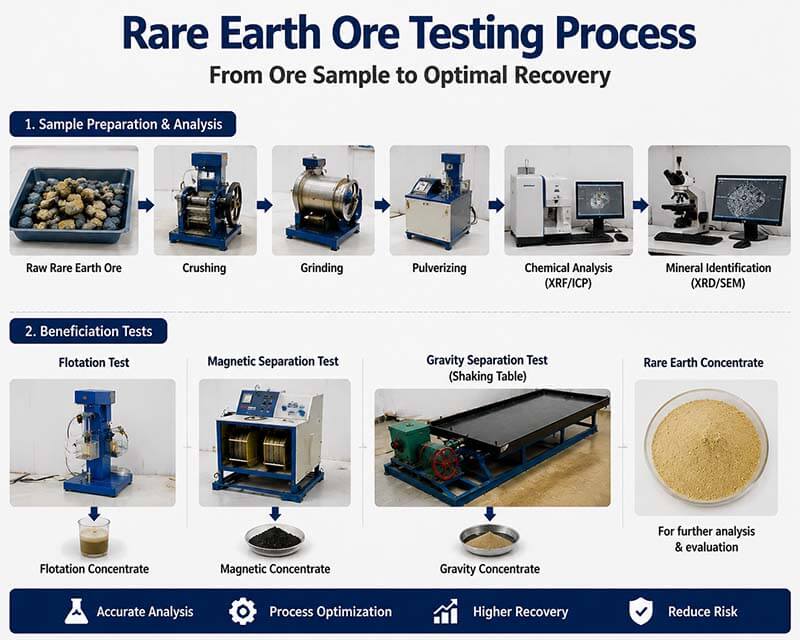
Ore characterization → Crushing → Grinding test → Magnetic separation test → Flotation test → Combined flowsheet test → Closed-circuit optimization
Important tests include:
- Chemical analysis
- Mineralogical examination
- Particle-size analysis
- Liberation analysis
- Magnetic susceptibility testing
- Grinding tests
- Flotation reagent optimization
- Concentrate and tailings analysis
The final comparison should consider both grade and recovery, reagent consumption, grinding requirements, equipment capacity, and operating complexity.
Common Pyrrhotite Beneficiation Problems
Poor Recovery
Possible causes include inadequate liberation, weak magnetic response, unsuitable reagent conditions, excessive oxidation, or inappropriate particle size.
Excessive Pyrrhotite in Copper Concentrate
Investigate:
- pH control
- Depressant dosage
- Collector selectivity
- Grinding conditions
- Cleaner flotation
- Magnetic separation opportunities
Good Recovery but Low Concentrate Grade
This can indicate poor selectivity, excessive gangue entrainment, over-collecting, or insufficient cleaning.
Recovery Falls After Fine Grinding
Possible reasons include excessive slime generation, oxidation, and changes in mineral surface properties.
Conclusion
Pyrrhotite beneficiation is not a one-process-fits-all problem. Magnetic separation can be highly attractive for sufficiently magnetic pyrrhotite, while flotation is often more suitable for fine and complex sulfide ores. Gravity separation can have a role when particles are coarse and liberated, and combined flowsheets may provide better overall performance for complex deposits.
The most important step is therefore not choosing a crusher, magnetic separator, or flotation machine first. It is understanding the ore first. Mineralogy, liberation size, magnetic properties, oxidation behavior, associated minerals, and final product requirements should guide the flowsheet.
For new pyrrhotite projects, laboratory beneficiation testing is the most reliable way to determine whether magnetic separation, flotation, gravity separation, or a combination can deliver the required concentrate grade and recovery.
JXSC lab mineral processing equipment manufacturer has more than 38 years of experience in mining processing. We provide various lab mining equipment including gravity-separating equipment for processing minerals such as gold, tin, tungsten, lead, zinc, tantalum, niobium, iron, manganese, silver, titanium-iron, etc. Lab machines include laboratory jaw crusher, hammer crusher, roller crusher, grinding equipment, lab gravity separator, screening, washing equipment, etc. Welcome to consult!