Rare earth minerals are important raw materials for permanent magnets, electronics, renewable energy technologies, and other advanced industrial applications. However, extracting valuable rare earth elements from natural ores is challenging because mineral composition, liberation characteristics, and associated gangue vary significantly between deposits. Selecting suitable processing equipment without understanding these characteristics can lead to low recovery, poor concentrate quality, and unnecessary operating costs.
A rare earth ore beneficiation test and lab equipment program helps determine how an ore responds to different separation methods before a commercial processing plant is designed. By combining mineralogical analysis, laboratory separation tests, and quantitative performance evaluation, mining companies can identify promising processing routes and make more informed equipment decisions.
This guide explains the main laboratory testing stages, commonly used separation equipment, and practical considerations for developing an effective rare earth beneficiation process.
1. Why Rare Earth Ore Beneficiation Testing Is Important?
Rare earth ores contain valuable minerals mixed with gangue, such as quartz, feldspar, iron-bearing minerals, and other deposit-specific impurities. The right beneficiation method depends on the properties of the minerals carrying the rare earth elements, not just the total rare earth oxide (TREO) grade.
Laboratory testing establishes whether valuable minerals can be separated efficiently and identifies the conditions needed to improve concentrate quality and recovery. It also helps engineers determine whether a single separation method is sufficient or whether multiple stages are required.
Practical recommendation: Do not select equipment based only on the ore or its reported grade. Begin with representative sampling, chemical analysis, and mineralogical characterization.
2. Analyze Ore Characteristics Before Selecting Laboratory Equipment
The first stage of rare earth beneficiation testing is understanding the material being processed. Different deposits can require substantially different test programs.
Identify Rare Earth Minerals and Deposit Types
Common rare earth-bearing minerals include bastnäsite, monazite, and xenotime. These minerals differ in chemical composition, physical properties, and associations. Rare earth deposits may occur in hard-rock formations, heavy-mineral sands, or ion-adsorption clays.
These differences directly influence equipment selection. For example, gravity and magnetic separation may suit certain heavy-mineral sand deposits, while flotation may be considered for liberated hard-rock ores. Ion-adsorption clay deposits may require specialized leaching tests rather than relying primarily on conventional physical separation.
Evaluate Mineral Composition and Liberation
Laboratories commonly combine chemical assays with mineralogical examination to determine the feed composition and identify potential separation opportunities. X-ray fluorescence (XRF) and inductively coupled plasma methods (ICP-OES or ICP-MS) can help establish elemental concentrations, while microscopy and other mineralogical techniques reveal mineral associations and liberation characteristics.
Important factors include:
- Mineral composition: Which minerals contain the rare earth elements?
- Liberation size: At what particle size can minerals be separated from gangue?
- Particle-size distribution: Are the particles suitable for the proposed separation equipment?
- Impurities: Are thorium, uranium, iron, phosphorus, or other constituents relevant to processing and waste management?
Grinding may improve liberation, but excessive grinding can generate fine slimes that complicate separation. Laboratory testing helps establish a practical balance between liberation and downstream processing performance.
3. Laboratory Gravity Separation Equipment
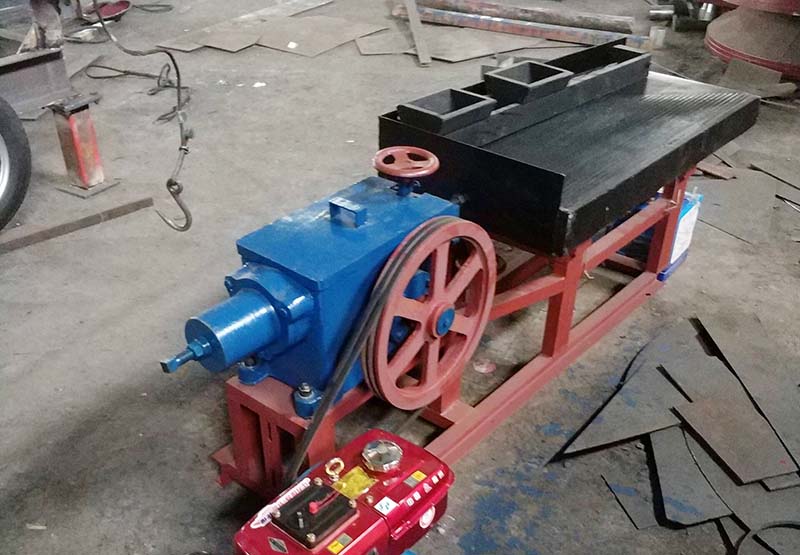
Gravity separation exploits differences in particle density and movement behavior. It can be useful for suitable rare earth-bearing minerals, particularly in certain heavy-mineral sand deposits and other ores with favorable density contrasts.
Common laboratory gravity separation equipment includes:
- Shaking tables: Separate suitable mineral particles into concentrate, middlings, and tailings for evaluation.
- Laboratory jigs: Test density-based stratification under controlled pulsation conditions.
- Spiral concentrators: Evaluate gravity concentration of appropriately sized granular mineral feeds.
- During testing, operators should control feed size, feed rate, water conditions, and equipment settings. The resulting products are collected, weighed, and analyzed to determine how effectively valuable minerals have been concentrated.
Gravity separation is not suitable for every rare earth ore. Fine particles, poor liberation, and insufficient density contrast may limit its effectiveness. Testing should establish whether gravity concentration can serve as a primary separation stage or as preconcentration before another method.
4. Laboratory Magnetic Separation Equipment
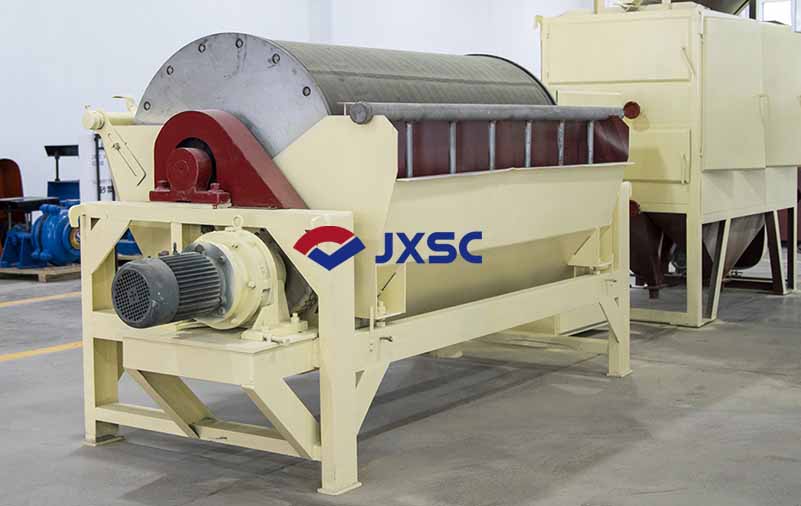
Magnetic separation uses differences in magnetic susceptibility to separate minerals. Depending on the ore, the objective may be to recover a target mineral fraction or remove unwanted magnetic minerals that interfere with downstream processing.
Laboratory magnetic separation equipment may include low-intensity magnetic separators, high-intensity magnetic separators, and specialized induced-roll separators for suitable dry mineral fractions.
The testing procedure generally involves preparing a representative feed, selecting appropriate magnetic field conditions, collecting magnetic and nonmagnetic products, and analyzing each fraction.
Key evaluation factors include:
- Magnetic susceptibility of the target and associated minerals.
- Wet or dry feed conditions.
- Particle size and degree of liberation.
- Magnetic field strength and separator configuration.
- Rare earth recovery, concentrate grade, and impurity rejection.
Not all rare earth minerals respond strongly to magnetic fields. Mineralogical analysis should therefore guide the separator selection and test conditions rather than assuming magnetic separation will always improve recovery.
5. Laboratory Flotation Equipment
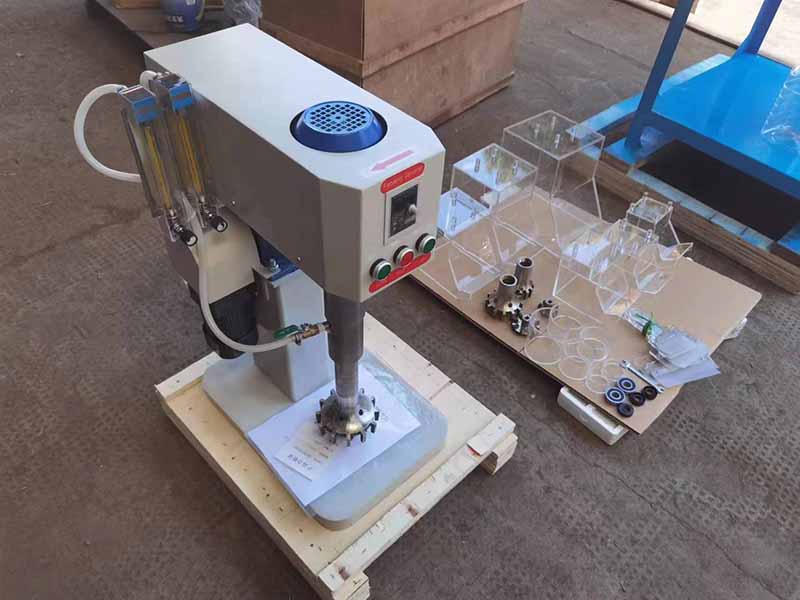
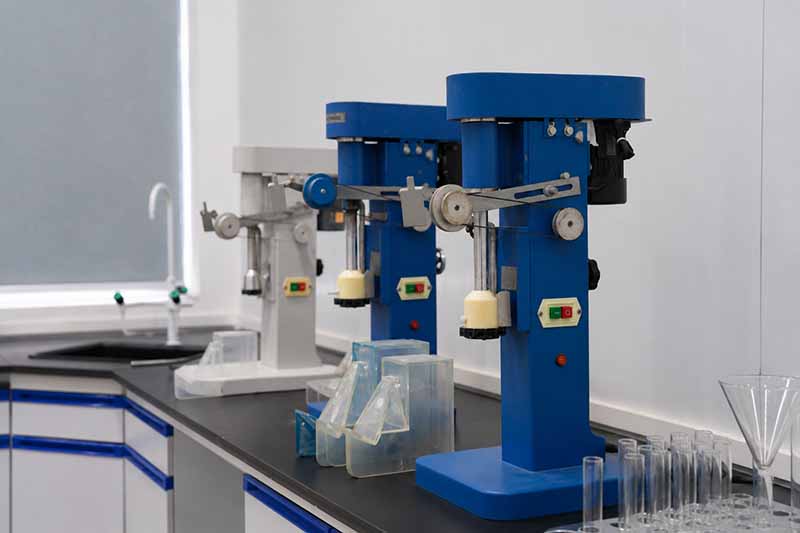
Flotation separates minerals according to differences in surface properties. It can be an important option for certain rare earth ores when the target minerals can be selectively attached to air bubbles while unwanted minerals remain in the pulp.
A laboratory flotation machine allows operators to investigate the effects of grinding, reagent selection, pH, pulp density, conditioning time, aeration, and flotation duration.
A typical laboratory flotation program involves preparing the pulp, conditioning it with selected reagents, conducting flotation under controlled conditions, and collecting the resulting concentrate and tailings for analysis.
The main variables to investigate include:
- Grind size and mineral liberation.
- Collector and other reagent types and dosages.
- Pulp pH and water chemistry.
- Conditioning and flotation time.
- Concentrate grade, recovery, and impurity content.
Evaluate flotation results as a balance between grade and recovery. A high-grade concentrate is not necessarily the best result if too much valuable rare earth material is lost to the tailings. Repeat tests and additional cleaning stages may be needed to confirm a promising result.
6. Laboratory Electrostatic Separation Equipment
Electrostatic separation distinguishes suitable mineral particles according to their electrical behavior, including differences in conductivity. It is particularly relevant to certain dry, classified heavy-mineral fractions and may be considered after preliminary concentration.
Laboratory electrostatic separators, including suitable high-tension or roll-type units, can help determine whether the electrical properties of the mineral fractions provide useful selectivity.
Successful testing depends on consistent feed preparation and control of operating conditions.
Important considerations include:
- Moisture content and sample dryness.
- Particle-size distribution and feed consistency.
- Electrical properties of the target and associated minerals.
- Electrode settings and feed rate.
- Concentrate grade, recovery, and impurity distribution.
Electrostatic separation should not be treated as a universal solution for rare earth ores. Its suitability must be demonstrated through mineralogical analysis and controlled laboratory tests.
7. How to Evaluate Beneficiation Test Results
Compare laboratory results by consistent, measurable indicators rather than concentrate grade alone.
The main performance indicators are:
- Concentrate grade: The proportion of the target component in the concentrate.
- Recovery: The proportion of the target component in the feed recovered into the selected product.
- Mass yield: The percentage of feed mass reporting to that product.
- Enrichment ratio: Concentrate grade divided by feed grade.
8. Selecting Laboratory Equipment and Developing a Process Flowsheet
The most effective equipment selection process begins with ore characterization and progresses through targeted laboratory testing. Not every project requires every separation method, and the sequence of tests should reflect the actual mineral properties.
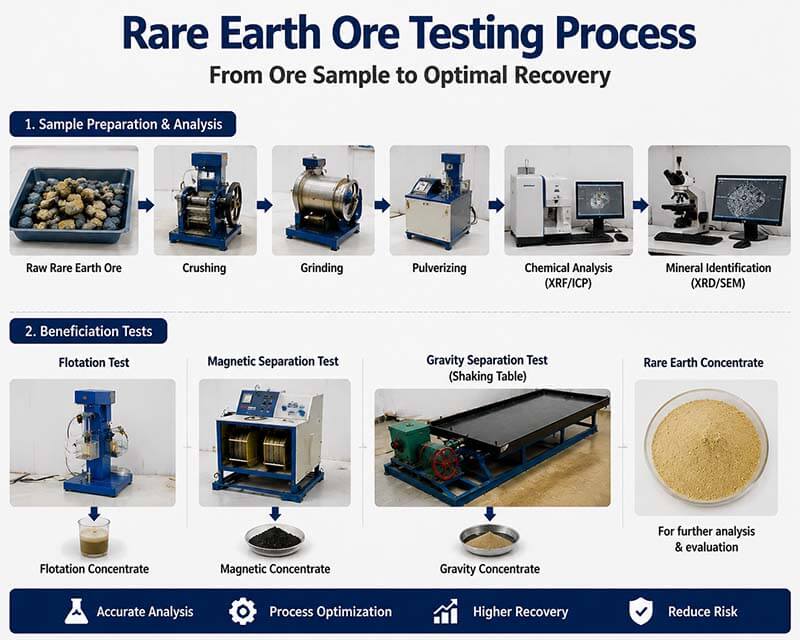
A practical workflow is:
- Collect and prepare representative ore samples.
- Establish head grade, mineralogy, and particle-size distribution.
- Identify promising separation methods from the ore characteristics.
- Conduct controlled gravity, magnetic, flotation, electrostatic, or chemical tests as appropriate.
- Analyze all products and compare recovery, grade, mass yield, and impurities.
- Repeat promising tests and develop a preliminary flowsheet.
- Determine whether pilot testing is necessary before commercial equipment selection.
When evaluating laboratory equipment, also consider sample capacity, adjustable operating parameters, ease of product collection, repeatability, maintenance, and technical support.
Laboratory results provide a basis for process development, but they do not guarantee industrial performance. Pilot testing may be required to assess continuous operation, water consumption, reagent demand, equipment capacity, and variations in ore characteristics.
Conclusion
An effective rare earth ore beneficiation test and lab equipment program connects mineral characterization with practical separation testing and quantitative performance evaluation. Gravity, magnetic, flotation, electrostatic, and chemical methods each serve different purposes, and their suitability depends on the ore’s mineralogy and processing objectives.
By starting with representative samples, selecting equipment based on mineral properties, and evaluating both recovery and concentrate quality, mining companies can reduce uncertainty and develop more reliable beneficiation flowsheets before moving to larger-scale processing.
For projects involving unfamiliar or complex rare earth ores, a structured laboratory test program is the most practical starting point for identifying suitable separation equipment and establishing the next steps toward process development.
JXSC lab mineral processing equipment manufacturer has more than 38 years of experience in mining processing. We provide various lab mining equipment including gravity-separating equipment for processing minerals such as gold, tin, tungsten, lead, zinc, tantalum, niobium, iron, manganese, silver, titanium-iron, etc. Lab machines include laboratory jaw crusher, hammer crusher, roller crusher, grinding equipment, lab gravity separator, screening, washing equipment, etc. Welcome to consult!