In the realm of modern industry, few mineral combinations are as strategically significant as molybdenum-copper ores. These complex geological formations serve as the backbone for numerous applications, ranging from the electrical wiring in our homes to the high-strength steel alloys used in skyscrapers and bridges. As technology advances, the comprehensive utilization value of these ores continues to climb, making their efficient processing more critical than ever for the global heavy industry landscape.
What is Molybdenum-Copper Ore?
Molybdenum-copper ore refers to natural mineral deposits that contain both copper and molybdenum minerals in economically recoverable concentrations. These are not haphazard collections of rocks but rather specific geological entities, most commonly associated with porphyry copper deposits. In these vast, low-grade formations, metals exist throughout the rock, and it is not uncommon for molybdenum to be a significant co-product or byproduct.
- The star of the show in these ores is chalcopyrite (CuFeS₂), the primary copper-bearing mineral, often accompanied by other copper sulfides like bornite and chalcocite. The molybdenum is almost exclusively present as molybdenite (MoS₂), a soft, metallic-gray mineral that is naturally floatable. The worthless material surrounding these valuable minerals, known as gangue, typically consists of silicates like quartz (SiO₂) and various altered rock minerals.
- While the copper content in mineable ores can range from 0.4% to over 1%, the molybdenum grade is often lower. It makes the efficiency of the separation process absolutely vital for a project’s economic success. The presence of other minerals, such as pyrite (FeS₂), can further complicate the process, requiring carefully designed strategies to ensure that the final copper and molybdenum concentrates meet market specifications.
The Beneficiation Method for Molybdenum-Copper Ores
Given that the valuable minerals are sulfides, the universal and most effective method for recovering them is froth flotation. This physicochemical process exploits the differences in surface properties of the minerals. In simple terms, it involves grinding the ore, mixing it with water to create a slurry (pulp), and then introducing air bubbles. With the help of specific chemical reagents, the valuable minerals are rendered hydrophobic (water-repellent) and attach themselves to these air bubbles, floating to the surface to form a froth that is collected as a concentrate. The unwanted gangue remains wetted and discharged as tailings.
While the core principle is simple, the strategy for copper-molybdenum ores involves two distinct stages:
Bulk (or Collective) Flotation
It is the most common and cost-effective approach, particularly for low-grade ores. The primary goal here is to recover all sulfide minerals—chalcopyrite, molybdenite, and often pyrite—together in a single, mixed concentrate. The process parameters are carefully controlled:
- Grinding Fineness: The ore must be ground enough to liberate the valuable minerals from the gangue. Research indicates that a grind size where 70% of the material passes through a 74µm sieve is often a good starting point for rougher flotation.
- Reagents: Add Collectors such as xanthates and specialized collectors to render the sulfides hydrophobic. A frother (e.g., MIBC, BK233) is used to create a stable froth. Add lime to adjust the pH and depress the flotation of unwanted iron sulfides.
Copper-Molybdenum Separation
The bulk concentrate now contains both valuable metals, which must be separated from each other. It is one of the most technically challenging steps in the process. The strategy relies on the fact that molybdenite is naturally more floatable than chalcopyrite. Therefore, the process is positive:
- Depression of Copper: The bulk concentrate is treated with a copper depressant, most commonly sodium hydrosulfide (NaSH) or sodium sulfide (Na₂S). These chemicals render the surfaces of the copper minerals hydrophilic, preventing them from floating.
- Flotation of Molybdenum: With the copper minerals depressed, the molybdenite is floated off by a collector, often fuel oil or kerosene, which enhances its natural floatability. The product of this stage is a high-grade molybdenum concentrate, while the material left in the cell becomes the final copper concentrate.
This two-stage process, while effective, requires precise control over reagent dosages, grinding, and pulp chemistry to achieve optimal recovery and grades.
Lab Molybdenum-Copper Ore Beneficiation Test Operation
Sample Preparation and Crushing
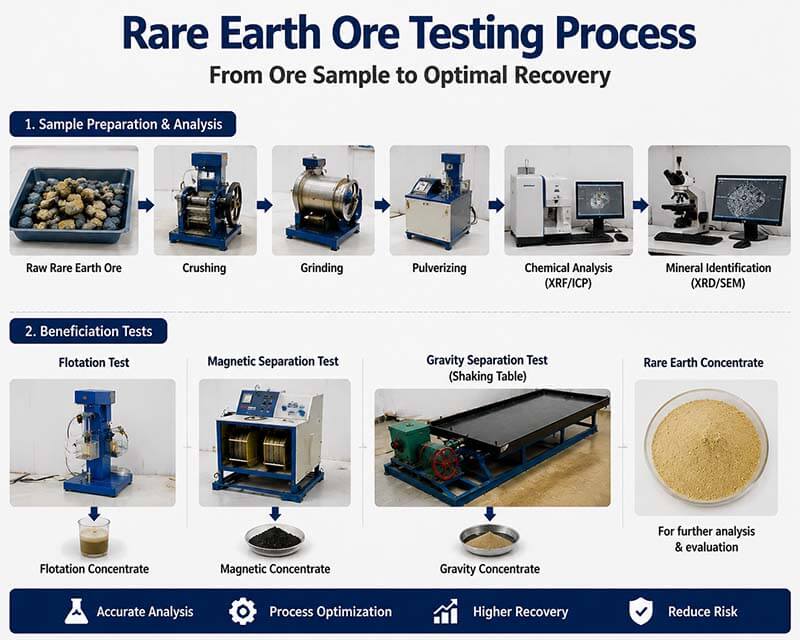
The first step is to obtain a representative sample of the ore. This sample is then crushed in a laboratory jaw crusher to reduce it to a manageable size, typically less than 2-3 mm. The crushed material is then thoroughly mixed and “split” into representative 1 kg batches that will be used for individual tests.
Grinding
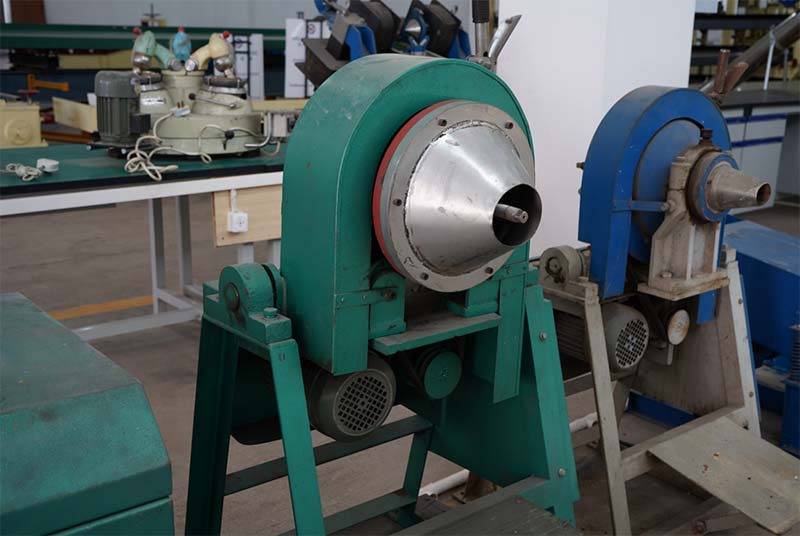
Each 1 kg batch is placed in a laboratory rod or ball mill along with a specific amount of water to achieve a pulp density of 50-60% solids. is Calculate the grinding time to achieve a target particle size distribution (fineness). This step is critical, as insufficient grinding fails to liberate the minerals, while over-grinding can create slimes that are difficult to float.
Flotation (Rougher Stage)
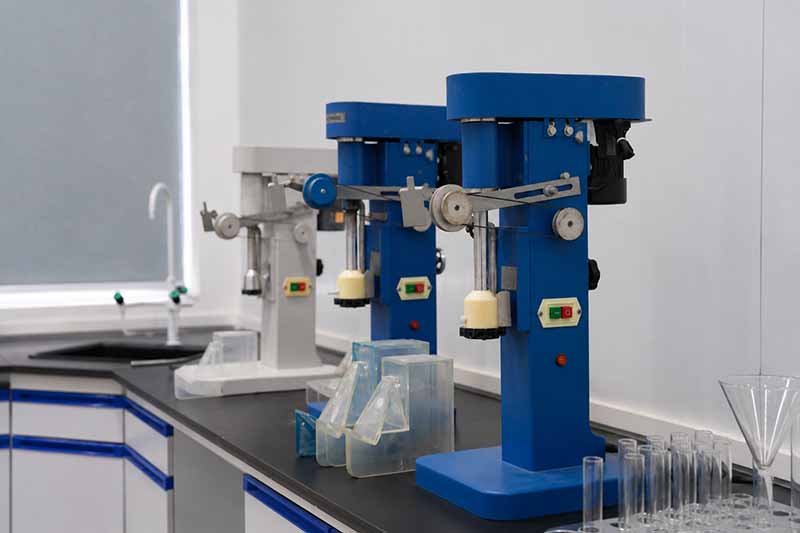
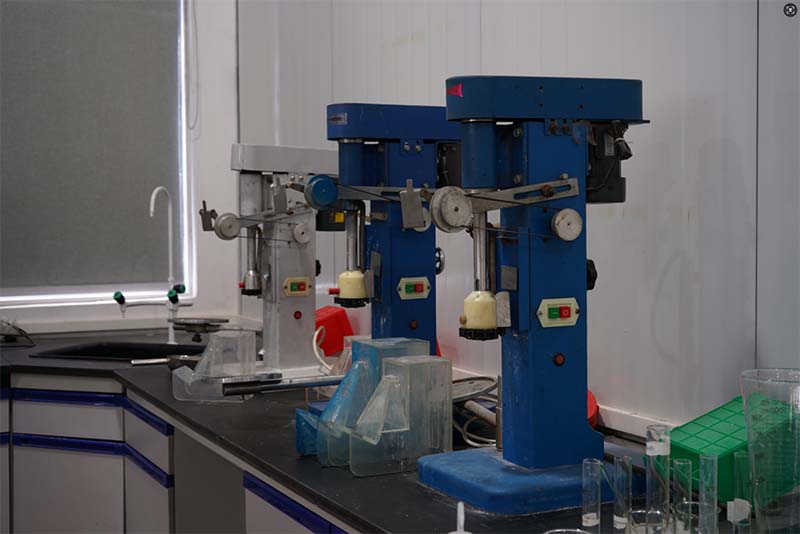
Transfer the ground slurry to a laboratory flotation machine, such as an XFG or similar model, equipped with a cell of appropriate volume.
- Agitation and Conditioning: Start the impeller, and add water to adjust the pulp density to the desired level (e.g., 27% solids). The required reagents (e.g., pH modifier, collector, frother) are added in a specific order and allowed to condition (mix) with the pulp for a set time.
- Flotation: Open the air valve, creating a froth layer at the top of the cell. The froth, laden with hydrophobic sulfide minerals, is mechanically scraped off for a predetermined period (e.g., 5-7 minutes). This collected material is the rougher concentrate.
- Analysis: The rougher concentrate and the remaining tailings are filtered, dried, and weighed. Samples are then sent for chemical analysis to determine the copper and molybdenum grades, allowing for the calculation of recovery rates.
Cleaning and Scavenging Tests
To simulate a complete industrial circuit, the rougher concentrate goes to further “cleaning” flotation stages to upgrade its quality. Conversely, the rougher tailings can be sent through a “scavenger” stage to recover any remaining valuable minerals. This multi-stage testing defines the final concentrate grades and overall recovery expected in a real plant.
Data Analysis and Optimization
By repeating this process while systematically varying one parameter at a time (e.g., grind size, collector type, pH), metallurgists can build a comprehensive model of the ore’s behavior and identify the precise conditions that maximize both grade and recovery.
Lab Equipment for Molybdenum-Copper Ore Beneficiation Testing
A functional mineral processing laboratory requires a suite of specialized equipment to simulate and analyze the industrial beneficiation process. The core components can be categorized as follows:
Size Reduction Equipment:
- Laboratory Jaw Crusher: For the primary crushing of bulk ore samples down to a few millimeters.
- Laboratory Ball Mill or Rod Mill: Essential for grinding the crushed ore to the required fineness for flotation. These mills allow for precise control over grind time and pulp density.
Sample Preparation and Handling:
- Sample Splitter (e.g., Jones Riffle Splitter): To obtain representative and repeatable sub-samples from the bulk material.
- Sieving Equipment: A set of standard test sieves (e.g., 75µm, 106µm) and a sieve shaker to verify the particle size distribution after grinding.
Core Flotation Equipment:
Laboratory Flotation Machine: This is the centerpiece of the testing lab. It consists of multiple units with variable-speed impellers and interchangeable cells of different volumes to accommodate different stages of the flotation process (rougher, cleaner, scavenger). Frequency-controlled machines are popular for their precision and accuracy. These machines can handle a variety of minerals, including copper, lead, zinc, and molybdenum.
Supporting Laboratory Equipment:
- pH Meter: For accurately measuring and controlling the pulp pH, a critical factor in reagent performance.
- Drying Ovens: To dry the concentrate and tailings samples after each flotation test so they can be weighed and prepared for analysis.
- Weighing Scales: High-precision balances for weighing ore samples, reagents, and final products.
- Filtration Equipment (e.g., Vacuum Filter): To separate the solid mineral particles from the water after the flotation test.
Conclusion
By meticulously following these testing procedures with the right equipment, mining operations can de-risk their projects, optimize their processing plants, and ensure extracting the maximum possible value from every ton of molybdenum-copper ore, feeding the industries that build our modern world.
JXSC lab mineral processing equipment manufacturer has more than 38 years of experience in mining processing. We provide various lab mining equipment including gravity-separating equipment for processing minerals such as gold, tin, tungsten, lead, zinc, tantalum, niobium, iron, manganese, silver, titanium-iron, etc. Lab machines include laboratory jaw crusher, hammer crusher, roller crusher, grinding equipment, lab gravity separator, screening, washing equipment, etc. Welcome to consult!