In the diverse world of mining and mineral processing, few ores capture the imagination and economic interest as much as Galena. Known primarily as the principal ore of lead, this distinctive, metallic gray mineral has been sought after for millennia. For mining professionals, geologists, and metallurgists, understanding Galene properties, extracting valuable components, and testing its processing characteristics is fundamental. This comprehensive blog will delve into the essence of Galena, outline the standard beneficiation processes used to upgrade it, and provide a detailed walkthrough for conducting laboratory-scale beneficiation tests, including the essential equipment.
What is Galena?
Galena, with its chemical formula PbS (Lead Sulfide), is a naturally occurring mineral that serves as the world’s most significant source of lead. It is easily recognizable by its bright metallic luster, perfect cubic cleavage, and high density. Typically appearing in a sleek, lead-gray color, Galena often forms in hydrothermal veins in association with minerals such as sphalerite (zinc), pyrite (iron), and silver minerals. In fact, many Galena deposits contain appreciable amounts of silver, making them a valuable source of this precious metal.
What is the Process for Beneficiating Galena?
Beneficiation is the process of separating the valuable mineral (Galena) from the worthless gangue material to produce a concentrated product (lead concentrate) suitable for further processing, like smelting. The specific flow sheet depends on the ore’s characteristics—such as the liberation size of Galena grains and the type of associated minerals—but generally follows a sequence of crushing, grinding, and separation.
A standard Galena beneficiation process typically involves the following key stages:
1. Comminution:
This involves crushing the run-of-mine ore to a smaller size using jaw or gyratory crushers, followed by grinding in a ball mill or rod mill. The goal is to achieve “liberation,” where the Galena particles are separated from the gangue minerals.
2. Gravity Pre-Concentration (Optional):
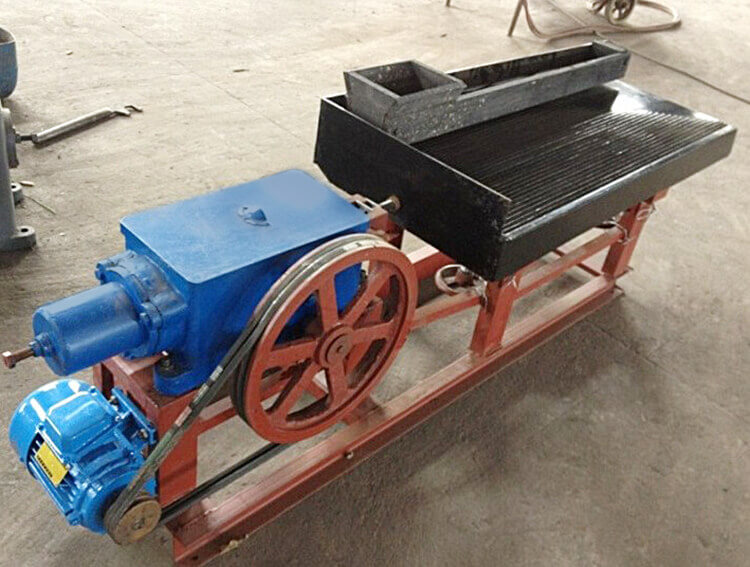
Due to Galena’s high specific gravity (7.4-7.6), it is usually processed by gravity separation methods.
3. Froth Flotation:
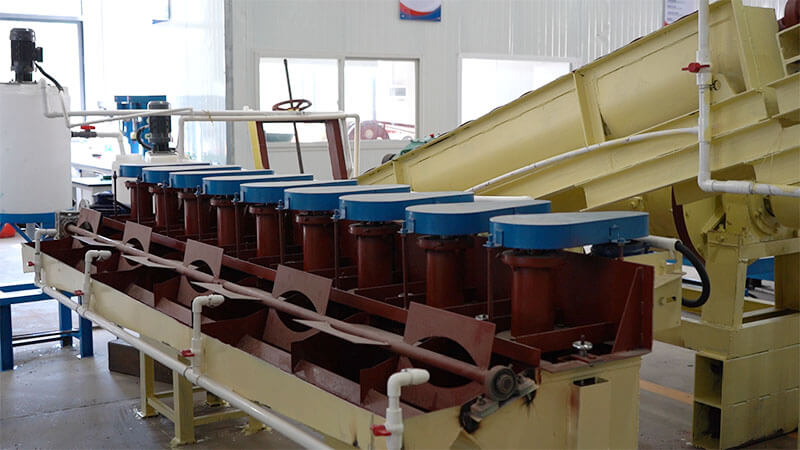
This is the most critical and widely used method for beneficiating Galena. It exploits the differences in the surface chemistry of the minerals.
- Conditioning: Treat the ground ore slurry with specific reagents in an agitated tank.
- Collectors: Xanthates. These selectively adsorb onto the surface of Galena particles, making them hydrophobic (water-repelling).
- Frothers: Add chemicals MIBC (Methyl Isobutyl Carbinol) to create a stable foam in the flotation cell.
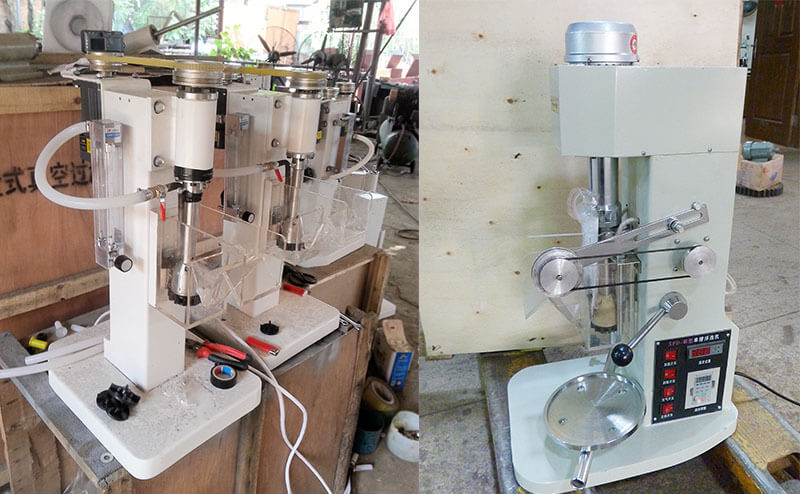
4. Separation:
bubbled air through the conditioned slurry. The hydrophobic Galena particles attach to the air bubbles and rise to the surface, forming a mineralized froth. Skim off the froth as the lead concentrate. The hydrophilic (water-loving) gangue particles (silicates, carbonates) remain in the slurry and are discharged as tailings.
5. Concentrate Thickening and Filtration:
Thicken the final froth concentrate to increase solids density, then filter to produce a damp filter cake, which is the final product ready for sale or smelting.
6. Tailings Management:
The remaining slurry (tailings) goes to a tailings storage facility for responsible disposal or further treatment.
The success of this process hinges on optimizing parameters like grind size, reagent type and dosage, and pulp pH, which is precisely where laboratory testing becomes invaluable.
How to Operate a Lab Galena Beneficiation Test?
Laboratory-scale testing is the blueprint for successful plant-scale operation. It allows metallurgists to determine the optimal processing conditions with minimal cost and risk. A systematic approach is crucial for generating reliable, scalable data.
Here is a step-by-step guide to conducting a lab Galena beneficiation test, focusing on the dominant froth flotation method:
Sample Preparation
Obtain a representative sample of the Galena ore (usually 10-50 kg). Dry it at a low temperature to avoid oxidation, then stage-crush it to below 2mm or 1mm. Split the sample using a riffle splitter to create identical test charges (typically 500g to 1kg).
- Grindability Test (Bond Work Index): Determine the energy required to grind the ore to the desired liberation size. This data is critical for sizing industrial grinding mills.
- Liberation Analysis: Create polished sections of the ore at different grind sizes. Analyze them under a mineralogical microscope or an automated SEM (QEMSCAN/MLA) to identify the particle size at which Galena is fully liberated from the gangue.
Batch Flotation Testing – The Heart of the Lab Work:
- Set up: Charge a laboratory flotation cell (e.g., 1-3 L capacity) with the prepared ore sample and the appropriate amount of water.
- Grinding: Grind the slurry in the cell with steel balls for a predetermined time to achieve the target P80.
- Conditioning: Add the reagents (depressant first, then collector) and condition for a set time (2-5 mins) with the agitator running but no air.
- Flotation: Introduce air at a controlled rate. Start the timer and carefully scrape the froth (concentrate) into a tray at regular intervals (e.g., every 15 seconds for 2 mins, then every 30 seconds). It creates timed concentrates (C1, C2, etc.) to understand flotation kinetics.
- Filtration and Drying: Filter the concentrates and tailings. Dry and weigh each product.
Analysis and Calculation:
Assay the lead (and often silver) content in the feed, each concentrate, and the tailings. Calculate key metallurgical performance indicators:
- Recovery: The percentage of lead metal in the feed that is reported to the concentrate. (Mass of Metal in Conc / Mass of Metal in Feed) * 100.
- Grade: The percentage of lead (or Pb equivalent) in the concentrate.
- Mass Pull: The percentage of the original feed mass recovered as concentrate.
- Optimization: Repeat the batch tests, varying one parameter at a time. It identifies the conditions that yield the highest grade at an acceptable recovery, defining the optimal process flow sheet.
Lab Equipment for Galena Beneficiation Testing
A well-equipped mineral processing laboratory is essential for conducting these tests accurately.
1. Sample Preparation:
- Jaw Crusher: For primary crushing of ore to ~10mm.
- Roll Crusher / Cone Crusher: For secondary crushing.
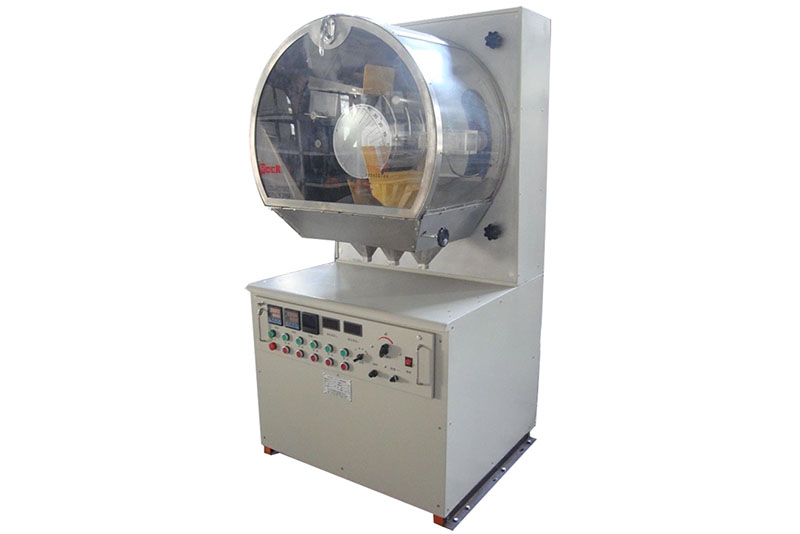
- Rotary Sample Divider (Riffle Splitter): For obtaining representative sub-samples.
Pulverizer / - Laboratory Ring Mill: For fine grinding to create homogenous samples for chemical assay.
- Drying Oven: For drying samples at controlled temperatures.
2. Comminution & Classification Testing:
Bond Ball Mill Work Index Test Apparatus: Standardized mill for determining grindability.
- Laboratory Ball / Rod Mill: For grinding ore to liberation size for flotation tests.
- Sieve Shakers and Test Sieves: For size analysis (determining P80).
3. Froth Flotation Testing:
- Laboratory Flotation Machine: The centerpiece. Consists of an impeller-agitated cell (0.5L, 1L, 2L, 3L) with variable speed control and an air flow meter. Denver D12-style machines are an industry standard.
- Laboratory pH Meter: Critical for monitoring and adjusting slurry alkalinity.
Reagent Dispensers: Graduated pipettes or syringes for accurate reagent addition.
4. Separation & Dewatering:
- Laboratory Thickener (Cylinder Settling Tests): For studying sedimentation rates.
- Vacuum Filtration Setup: Buchner funnel, flask, and vacuum pump for dewatering concentrates.
5. Analysis & Measurement:
Precision Balance (0.01g accuracy): For all weighing operations.
- Assay Equipment: This can range from traditional fire-assay furnaces for precious metals to modern X-ray fluorescence (XRF) or atomic absorption (AA) spectrometers for rapid, accurate elemental analysis of lead, zinc, iron, etc.
- Microscopy: A stereo microscope for coarse observation and a polarizing reflected light microscope for detailed mineralogical and liberation studies. Advanced labs may use Scanning Electron Microscopes (SEM) with automated mineralogy software.
By integrating the knowledge of Galena’s nature, the principles of its beneficiation, and a meticulous laboratory testing protocol backed by the right equipment, mining companies can de-risk projects, optimize plant design, and maximize the economic return from their Galena deposits. The journey from a rough ore sample to a definitive process flow sheet is a testament to applied geoscience and metallurgical engineering, ensuring this ancient mineral continues to power modern industry.
JXSC lab mineral processing equipment manufacturer has more than 38 years of experience in mining processing. We provide various lab mining equipment including gravity-separating equipment for processing minerals such as gold, tin, tungsten, lead, zinc, tantalum, niobium, iron, manganese, silver, titanium-iron, etc. Lab machines include laboratory jaw crusher, hammer crusher, roller crusher, grinding equipment, lab gravity separator, screening, washing equipment, etc. Welcome to consult!