In the world of industrial minerals, few are as crucial yet understated as ilmenite. As the primary ore of titanium, ilmenite forms the backbone of pigments that whiten our paints, plastics, and papers, and is fundamental in aerospace alloys and countless other high-tech applications. For mining professionals and exploration companies, understanding ilmenite—its properties and the methods to beneficiate it—is key to unlocking significant economic value. This deep-dive blog will explore what ilmenite is, the core beneficiation methods used to upgrade it, and provide a detailed, actionable guide on conducting lab-scale beneficiation tests with magnetic and flotation techniques.
What is Ilmenite?
Ilmenite is a heavy, black, opaque mineral with a chemical composition of iron titanium oxide (FeTiO₃). It is the most abundant and primary source of titanium dioxide (TiO₂), a commodity prized for its exceptional whiteness, opacity, and UV resistance. Found in both hard rock deposits (often in igneous formations, such as anorthosite) and sedimentary sands (as mineral sands), ilmenite is typically paramagnetic with a higher specific gravity than common silicate gangue minerals.
Naturally occurring ilmenite often contains impurities such as magnesium, manganese, and vanadium. Its quality is measured by its TiO₂ content, which can range from less than 40% in some crude ores to over 60% in upgraded products. The ultimate goal of ilmenite beneficiation is to remove iron and other impurities to maximize the TiO₂ content, producing either a high-grade ilmenite concentrate, titanium slag (via smelting), or synthetic rutile for the chloride pigment process.
Core Beneficiation Methods for Ilmenite
Ilmenite beneficiation is a multi-stage process designed to leverage its distinct physical and chemical characteristics. The chosen flow sheet depends heavily on the ore type (rock vs. sand), mineralogy, and the target product specification.
The most common and effective beneficiation methods include:
Gravity Separation:
This is almost always the first step, especially for placer or mineral sand deposits. It exploits the high specific gravity of ilmenite (4.5-5.0) compared to lighter gangue minerals. Equipment like spiral concentrators, shaking tables, and centrifugal concentrators efficiently produce a bulk heavy mineral concentrate (HMC).
Magnetic Separation:
This is the workhorse of ilmenite beneficiation. Ilmenite is paramagnetic, meaning it is attracted to a magnetic field but does not retain permanent magnetism. This allows it to be separated from non-magnetic minerals (e.g., zircon, quartz) and other magnetic minerals with different magnetic susceptibilities (e.g., magnetite is strongly ferromagnetic). Both low-intensity and high-intensity magnetic separators are used in various stages.
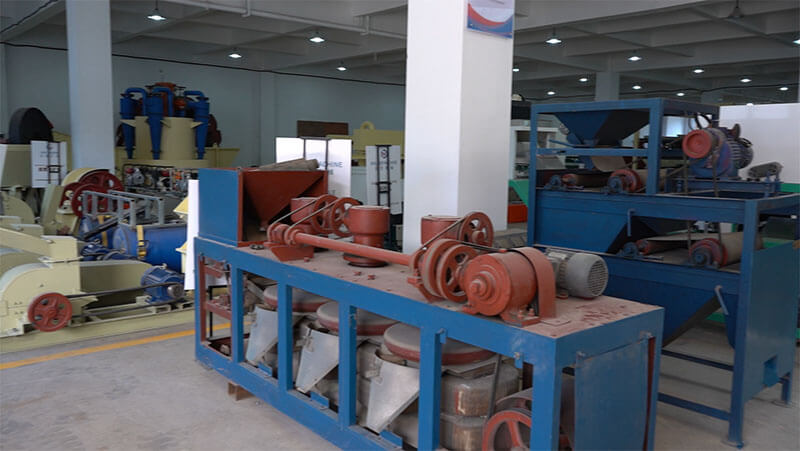
Electrostatic Separation:
used in tandem with magnetic separation for mineral sands, this method separates conductive from non-conductive minerals. After roasting, ilmenite becomes more conductive and separates from non-conductive minerals such as monazite or quartz.
Flotation:
This method becomes critical for complex, fine-grained hard rock deposits where gravity and magnetic separation alone are insufficient. Flotation uses chemical reagents to selectively render ilmenite surfaces hydrophobic (water-repellent), allowing them to attach to air bubbles and separate from hydrophilic (water-attracting) gangue. Fatty acids and hydroxamates are collectors used for ilmenite flotation.
Combined Magnetic-Flotation Flow Sheet:
For many challenging ores, a synergistic approach yields the best results. A typical flow sheet might involve:
- Crushing & Grinding to liberate ilmenite grains.
- Low-Intensity Magnetic Separation to remove ferromagnetic magnetite.
- High-Intensity Magnetic Separation (HIMS) to produce a primary ilmenite-rich magnetic concentrate.
- Flotation of the HIMS concentrate to reject silicate and other non-floatable impurities further, thereby boosting the final TiO₂ grade.
Lab-Scale Ilmenite Beneficiation Test: Magnetic & Flotation Methods
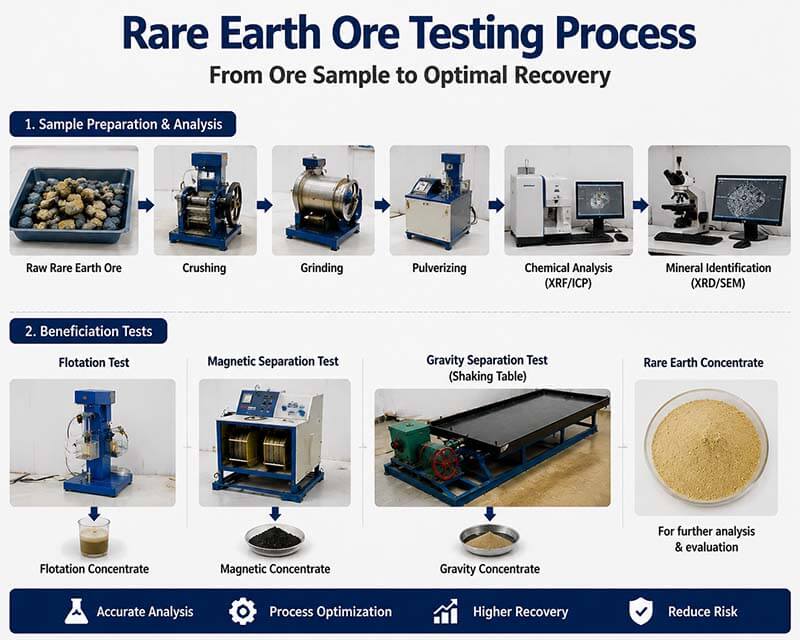
Conducting a systematic laboratory test is the critical first step in designing a full-scale plant. It de-risks the project by defining the optimal process route and recovery expectations. Here’s a step-by-step operational guide for a combined magnetic and flotation test.
Phase 1: Sample Preparation & Characterization
- Representative Sampling: Ensure your head sample is a true representative of the deposit.
- Crushing & Grinding: Use a laboratory jaw crusher and roll crusher to reduce the sample to 2mm below. Subsequently, a rod mill or ball mill grinds it to the target liberation size (e.g., 90% passing 150 microns). Grindability tests are crucial here.
- Sample Splitting & Analysis: Split the ground feed (head sample) for chemical assay (XRF, ICP) and mineralogical analysis (MLA, QEMSCAN) to establish baseline TiO₂, Fe₂O₃, and gangue content.
Phase 2: Magnetic Separation Testing
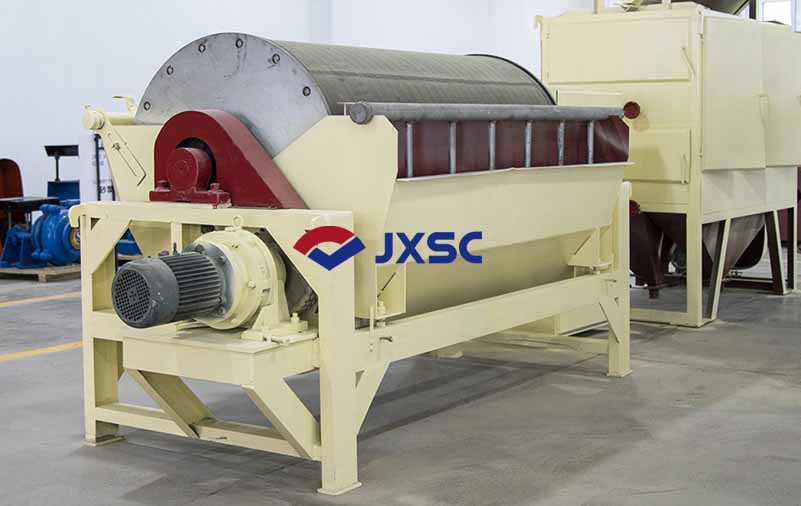
Low-Intensity Magnetic Separation (LIMS): Pass the ground pulp over a Davis Tube Tester or a lab-scale dry drum magnet. This step removes any strongly magnetic magnetite, creating a “non-mag” fraction for further processing.
High-Intensity Magnetic Separation (HIMS): The “non-mag” fraction is then processed through a laboratory wet high-intensity magnetic separator (WHIMS) or a dry induced roll magnetic separator. You will test various parameters:
- Magnetic Field Intensity: Systematically increase the current/field strength to draw off the paramagnetic ilmenite.
- Feed Rate & Pulp Density: Optimize for recovery and concentrate grade.
- Split Products: You will generate a magnetic concentrate (ilmenite-rich) and a non-magnetic tailing (discarded silicates, zircon, etc.). Both are dried, weighed, and assayed to construct a mass balance and calculate recovery.
Phase 3: Flotation Testing
- Conditioning: The magnetic concentrate is reground if necessary and placed in a laboratory flotation cell. Add water to achieve the desired pulp density (typically 25-35% solids).
- pH Modifier: Add reagents like sulfuric acid or sodium carbonate to adjust the pulp to the optimal pH range (often acidic, pH ~4-6 for ilmenite).
- Activator/Depressant: Add if needed (e.g., lead nitrate as an activator, sodium silicate as a silicate depressant).
- Collector: Add the selected collector (e.g., fatty acid, hydroxamate) and condition for a set time to allow adsorption onto ilmenite surfaces.
- Frother: Add a frothing agent (e.g., MIBC) just before flotation begins.
- Flotation & Product Collection: Start air agitation. The hydrophobic ilmenite particles attach to air bubbles and rise to form a froth.
- Skimming: Manually skim the froth (concentrate) at timed intervals (e.g., 1, 3, 5, 10 minutes) into trays.
- Filtration & Drying: Filter, dry, weigh, and assay each concentrate interval and the final tailings left in the cell.
- Data Analysis & Optimization: Calculate the cumulative recovery and grade for each test. Repeat the process, optimizing one variable at a time (reagent dosage, pH, grind size, flotation time) to map the performance envelope.
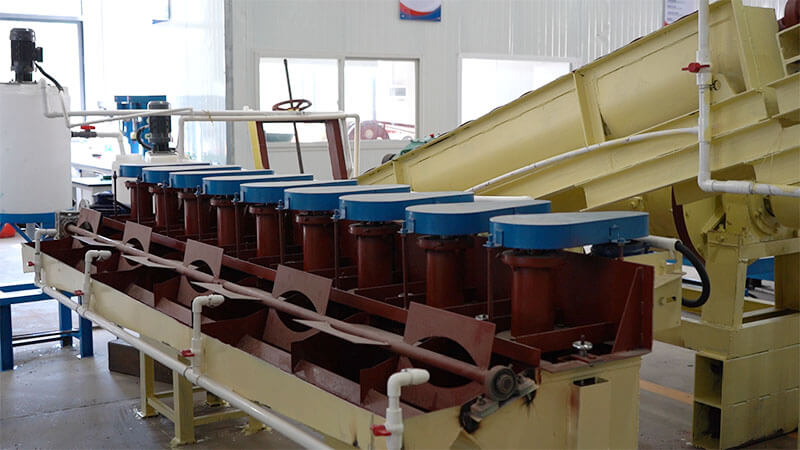
Essential Lab Equipment for Ilmenite Beneficiation Testing
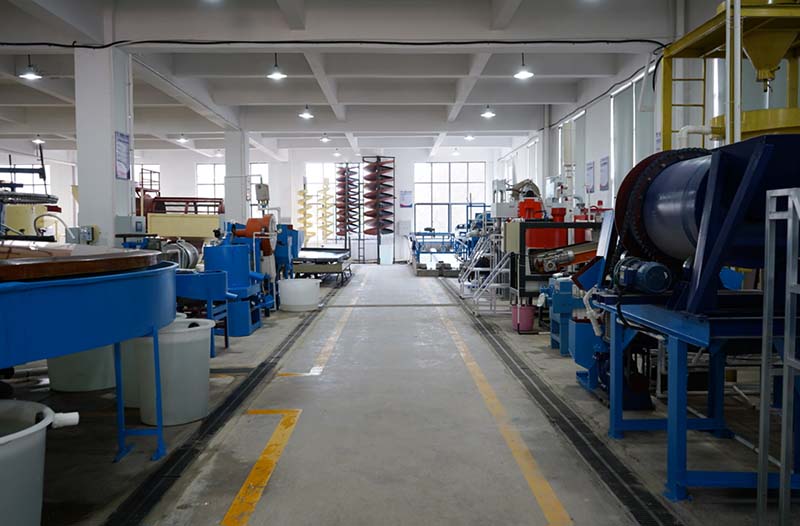
A well-equipped mineral processing laboratory is fundamental for reliable test work. Here is the core equipment needed for magnetic and flotation testing on ilmenite:
For Sample Preparation:
Jaw Crusher & Roll Crusher: For primary and secondary coarse crushing.
Laboratory Rod Mill / Ball Mill: For fine grinding to achieve liberation.
Rotary Sample Splitter & Riffle Splitters: To obtain representative sub-samples.
Sieve Shakers & Drying Ovens.
For Magnetic Separation:
Davis Tube Tester: The standard for low-intensity magnetic separation analysis.
Laboratory Wet High-Intensity Magnetic Separator (WHIMS): Essential for separating paramagnetic ilmenite. Models with adjustable current/field strength are required.
Induced Roll Magnetic Separator: An alternative for dry magnetic separation testing.
For Flotation Testing:
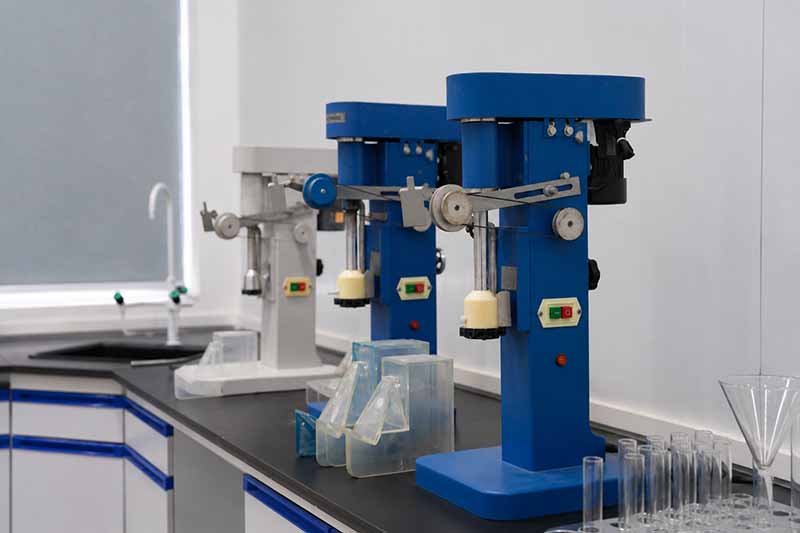
Laboratory Flotation Machine: A bank of small-capacity (0.5L to 3L) mechanically agitated flotation cells with variable speed control.
pH Meter: A high-quality, calibrated meter is non-negotiable for reagent optimization.
Reagent Dispensers: For accurate and repeatable reagent addition.
Filtration Setup (filter press or vacuum filter) and Drying Ovens.
For Analysis & Verification:
Analytical Balance: High-precision weighing.
Particle Size Analyzer (e.g., Laser Diffraction).
Conclusion
Ilmenite beneficiation is a sophisticated but well-understood process, hinging on the mineral’s inherent magnetic and surface chemistry properties. A successful project begins with meticulous laboratory test work. By investing in comprehensive lab testing with the right equipment, mining companies can confidently scale up from a promising ore body to a producing asset, feeding the global demand for the versatile and vital element: titanium.
For companies exploring ilmenite deposits, partnering with a laboratory that has proven expertise in titanium mineralogy and processing is not just a step—it’s the foundation of project success.
JXSC lab mineral processing equipment manufacturer has more than 38 years of experience in mining processing. We provide various lab mining equipment including gravity-separating equipment for processing minerals such as gold, tin, tungsten, lead, zinc, tantalum, niobium, iron, manganese, silver, titanium-iron, etc. Lab machines include laboratory jaw crusher, hammer crusher, roller crusher, grinding equipment, lab gravity separator, screening, washing equipment, etc. Welcome to consult!